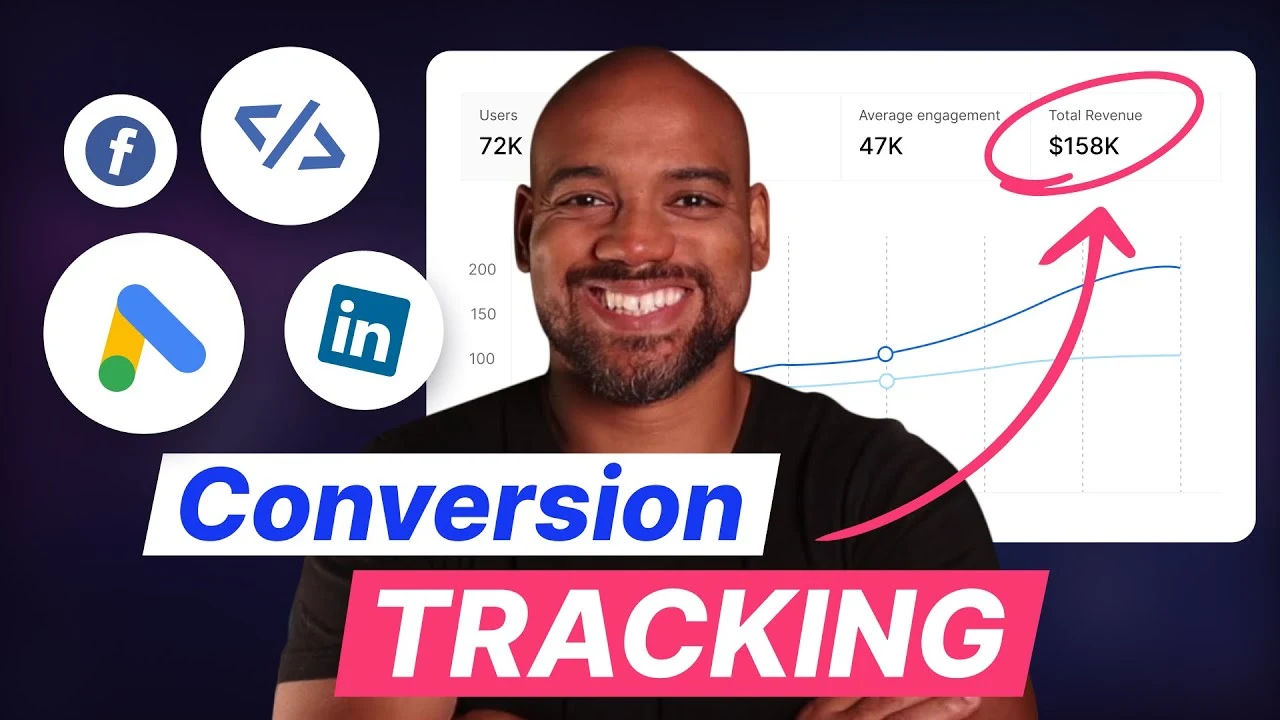
Are you struggling to measure the success of your digital health marketing campaigns? If so, you’re not alone. Tracking conversions can be challenging, especially in the complex world of healthcare. However, it’s critical to track conversions to optimize your campaigns and grow your revenue.
Use this checklist to define business outcomes, map events, test data quality, and connect marketing with your CRM. Review current vendor guidance before implementation; the original platform walkthrough reflects the source video’s publication period.
So, let’s get started!
Check privacy and data scope before installing tags
Separate B2B marketing pages from patient portals, appointment flows, and other pages that may expose sensitive information. Audit event payloads, URLs, query parameters, and consent behavior before enabling any analytics or advertising tag. Do not send patient details or sensitive health data to advertising tools.
LinkedIn’s Insight Tag guidance excludes pages that collect or contain sensitive data. Google Analytics guidance prohibits sending personally identifiable information, including through URLs and event fields. HIPAA-covered entities and business associates should assess applicable obligations with their privacy team using HHS tracking-technology guidance. Server-side collection is not an exemption from those requirements.
Map Your Customer & Event Journey
The first step in tracking conversions is to map your customer journey. This involves identifying the key actions users take on their journey to becoming a customer. Once you’ve identified these actions, you can develop a measurement plan to track them and define your key metrics and KPIs.
To develop an event tracking spec sheet, you’ll need to identify events to track, relevant pages and triggers, channels, and tracking codes. Some examples of events to track include demo requests, form submissions, content downloads, initiated calls, and initiated chats. We recommend using our event tracking spec sheet template to help you get started.
Set Measurable Goals for Each KPI
Once you’ve defined your key metrics and KPIs, it’s important to set measurable goals for each one. For example, if one of your KPIs is to increase demo requests, you might set a goal of a 20% increase in demo requests within the next three months.
Set up Google Tag Manager (GTM)
Google Tag Manager (GTM) is a powerful tool that can help you manage all your tracking pixels in one place. Here are the steps to set up GTM:
- Create a GTM account
- Install GTM only on approved domains and pages after the privacy review
- Enable only the variables required by the measurement plan
- Configure narrowly scoped triggers for the approved events
- Create triggers based on the event tracking spec sheet
- Create tags for Facebook, LinkedIn, Google Ads, and GA4
- Preview & debug: test all tags to ensure correct firing
Set up Meta Pixel for eligible marketing events
The Meta Pixel is a tracking tool that allows you to track conversions and create custom audiences for your Facebook Ads campaigns. Here are the steps to set up the Facebook Pixel:
- Create a Facebook Ads Manager account
- Confirm domain & install Pixel
- Set up Conversion API
- Add the Meta Pixel only on approved, consent-eligible marketing pages
- Implement custom events via GTM
- Create audiences in Facebook Ads Manager
- Link audiences to Facebook campaigns
- Create Facebook conversion tags and triggers in GTM
- For non-standard conversions, create “custom conversions” in Facebook Ads UI
- Apply UTM URL tracking code to all campaigns
Set up the LinkedIn Insight Tag
The LinkedIn Insight Tag is a tracking tool that allows you to track conversions and create custom audiences for your LinkedIn Ads campaigns. Here are the steps to set up the LinkedIn Pixel:
- Create a LinkedIn Ads Manager account
- Add the LinkedIn Insight Tag only on approved pages without sensitive data
- Create conversion events and trigger via GTM
- Apply UTM URL tracking code to all campaigns
Set up Google Ads conversion tracking
Google Ads conversion tracking that allows you to track conversions and create custom audiences for your Google Ads campaigns. Here are the steps to set up the Google Ads Pixel:
- Create a Google Ads Manager account
- Install and link Conversion Tracking
- Configure Google Ads tags only for approved pages and eligible audiences
- Link Google Ads and Google Analytics + import Google Analytics
In conclusion, conversion tracking is an essential component of any digital health marketing strategy. By following the steps outlined in this checklist, you’ll be able to effectively track conversions and optimize your campaigns to maximize your ROI.
Don’t forget to set measurable goals for each KPI, and use GTM and tracking pixels to manage your data and ensure accurate tracking.
To make things easier, we’ve created a conversion tracking checklist that you can download for free. This comprehensive checklist covers everything we’ve discussed in this post and more. Download the conversion tracking checklist.
If you’re feeling overwhelmed or confused, don’t hesitate to schedule a free consultation with us. Our team of experienced growth consultants can help you navigate the complexities of digital health marketing and develop a customized strategy to meet your business goals.
Download our conversion tracking checklist and schedule your free consultation today at mightyorbit.co.
| Event | Trigger | Validation |
|---|---|---|
| Demo request | Successful submission, not just a button click | One event per completed request; no form-field contents sent |
| Attended meeting | Attendance confirmed in the CRM | Separate booked meetings from no-shows |
| Qualified opportunity | Sales accepts a defined opportunity | Consistent qualification rules and campaign attribution |
Conversion tracking FAQs
Should tracking tags run on every healthcare page?
No. Review the page purpose, data, vendor restrictions, and applicable privacy requirements first. Patient-facing pages and sensitive workflows need particular scrutiny; consent alone does not make every disclosure permissible.
What should count as a primary conversion?
Choose an event that represents meaningful business progress and occurs reliably enough to measure. Keep lighter actions such as downloads separate from qualified meetings and opportunities.
How do we verify that tracking works?
Test successful and failed submissions, repeated clicks, consent states, and cross-domain handoffs. Confirm the expected event and CRM record, check for duplicates, and inspect the fields actually transmitted.
Related reading
Avoid counting the same conversion twice
If a Google Ads conversion action and an imported GA4 event represent the same business outcome, review which action is primary for bidding and reporting. Do not treat both as separate qualified leads. Google’s primary and secondary conversion guidance explains how those settings affect optimization.