Early customer conversations can make a healthtech launch feel more predictable than it is. A founder knows several clinicians, investors make introductions, and a small set of organizations starts evaluating the product.
Those conversations matter. The mistake is assuming they are already a repeatable go-to-market system.
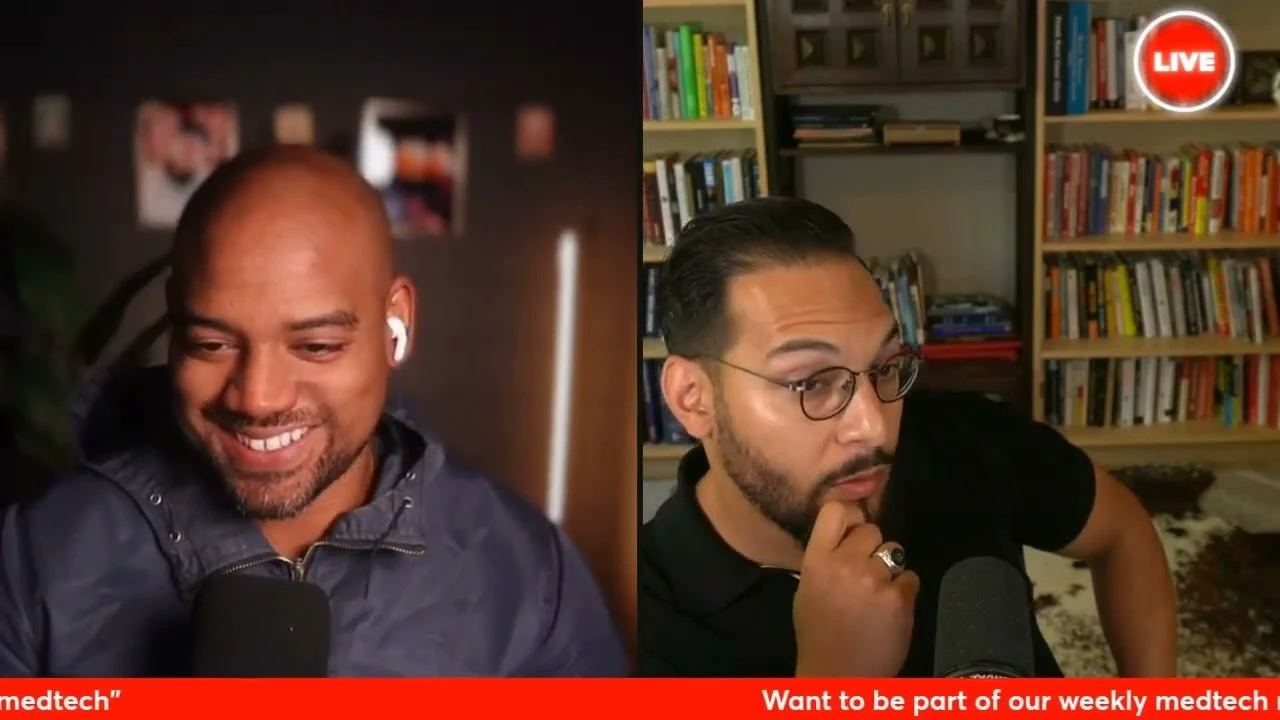
In the accompanying discussion, Orrett Davis and a fellow medtech marketer examine the gap between initial traction and broader market adoption. Their examples cover audience education, sales support, practitioner content, websites, and the point at which an advertisement should ask for a demo.
The recurring theme is simple: help a buyer make progress before expecting them to behave like a sales-ready prospect.
Mistake 1: Waiting until referrals run out to build awareness
A founder’s network can introduce the company to early adopters. It does not automatically reach the rest of the market.
When those introductions slow, a team can find itself trying to create awareness and close deals at the same time. That creates pressure to push every new contact directly toward a meeting.
Start learning how to reach relevant people before that happens. Identify where buyers already discuss their problems, what they ask about new solutions, and which messages earn meaningful attention.
At an early stage, the purpose may be feedback and education rather than immediate lead volume. A thoughtful conversation with a relevant buyer can clarify the market more than a large campaign built on an untested assumption.
The B2B marketing lessons for tech startups cover the importance of knowing customers and building a repeatable source of demand beyond referrals.
Mistake 2: Treating every interested person as ready for a demo
An unfamiliar prospect may still be trying to understand the problem, category, or product. Asking them to meet sales immediately can skip the information they need first.
The discussion makes an important distinction between cold traffic and an audience that has already engaged. A first encounter may call for a useful explanation, product demonstration, or comparison. A returning buyer may be ready for a more direct invitation.
That does not mean a cold audience can never request a demo. It means the campaign should not assume that everyone who notices an ad is ready for the same action.
Map the message to the buyer’s likely knowledge. Then choose a destination that helps them take the next useful step. The B2B marketing funnel guide provides a framework for those different stages.
Mistake 3: Leaving sales without material that answers objections
A promising conversation can stall when the only follow-up is another request for an update. Buyers may need evidence, internal agreement, implementation details, or an answer to a concern that has not been resolved.
Marketing can help sales by turning recurring questions into useful assets. A relevant customer story, a clear implementation explanation, or a concise comparison gives the buyer something concrete to use.
Begin with recent deals. Ask the sales team which questions repeatedly delayed progress and which materials they wished they had. Group those questions by the person who needs the answer.
A clinician may focus on use in practice. An operational stakeholder may need to understand training or workflow. A purchasing stakeholder may ask about the commercial process. One generic brochure is unlikely to do all of those jobs well.
Mistake 4: Producing polished content without showing practical value
The discussion highlights the value of practitioner experiences, product demonstrations, and direct explanations of a change in workflow. These can make a product easier to understand than a sequence of company announcements.
The useful question is what the viewer learns. Does the content show a relevant use case? Does it explain a difference? Does it address a concern that has appeared in sales conversations?
A recorded interview can supply several useful assets if the excerpts preserve the speaker’s meaning. A demonstration can make an unfamiliar product understandable. A customer story can provide context that a feature list cannot.
Secure the appropriate permissions and review product claims before using third-party or clinician material. The strategic value comes from credible relevance, not from assuming that public content is automatically available for advertising reuse.
Mistake 5: Choosing visibility that does not reach the buyer
A prominent media placement may impress stakeholders, but its value depends on the audience and the business objective. A specialist publication, community discussion, or industry podcast may be more relevant to a particular buyer group.
The discussion encourages teams to consider where end users actually spend attention. Apply that question to both earned and paid distribution.
Look beyond the number of reactions. Investigate whether the content reached relevant people, led to useful conversations, or helped prospects understand the product. Engagement can provide an early signal, but it is not proof of revenue impact.
Mistake 6: Making visitors work to understand the website
An abstract headline can sound impressive while leaving a visitor uncertain about what the company sells. The website should quickly explain the product category, intended user, and reason to investigate.
Show the product where appropriate and connect the visual to plain language. If the company offers several products, explain the category or shared use case before asking visitors to explore the portfolio.
Then make the next action easy to find. A prospect should not need to search several sections for a way to request a demonstration or ask a buying question.
This is a clarity problem before it is a redesign problem. A more specific headline, a better product explanation, or a visible call to action may address it without rebuilding the whole site.
Mistake 7: Adding form friction without a reason
Every required field asks the buyer to do more work. Some questions are necessary to qualify or route a request. Others can wait until the conversation.
The discussion examines a demo form that asks visitors to decide what to write before they know what the meeting will involve. A stronger page explains the session, who it is for, and what the visitor can expect to learn.
Review each field against a specific purpose. Keep the information needed to handle the inquiry well, and remove questions that simply duplicate later sales discovery. If the team needs more qualification, make that tradeoff deliberately.
Choose the next improvement from the buyer’s path
Trace one recent prospect from first exposure to the latest sales interaction. Note where they needed more information, encountered unnecessary work, or waited for an answer.
That exercise can reveal whether the next priority is awareness, a clearer page, better proof, a revised form, or stronger follow-up. It gives the team a reason for the next change beyond the desire to launch another campaign.
Watch the original discussion of healthtech go-to-market mistakes on YouTube for the recorded examples and conversation.
FAQ
Should a pre-launch healthtech company start marketing early?
It can begin learning about the audience and building appropriate awareness before a full commercial launch. The activities and claims should reflect the product’s actual stage and what the company is authorized to communicate.
Should every healthtech ad link to a demo form?
No. Choose the destination according to the message and the buyer’s readiness. Some visitors need education or comparison information before a meeting makes sense.
How can marketing help a deal that is stalled?
Identify the unresolved question and the stakeholder who needs an answer. Supply relevant evidence or a clear explanation rather than relying only on reminder emails.
Does improving conversion require a full website redesign?
Not always. Clearer positioning, useful product information, an obvious next step, and a more purposeful form may solve the immediate problem.
Want an outside view of where buyers lose momentum? GET MY FREE PIPELINE AUDIT.