The first decision in a LinkedIn advertising strategy is what the audience needs to understand next. Choosing an ad format before answering that question can leave you asking a cold audience for a demo or showing introductory content to people already evaluating you.
A buyer-journey approach connects the message, audience, and next step. The source video organizes this around awareness, consideration, and decision, with continued visibility between the later stages.
Awareness: explain the problem and who you help
People seeing your company for the first time need context. Introduce the problem you solve, the audience you serve, and why the issue deserves attention.
Use content that helps the reader recognize their situation. A useful next step might be an educational article or an explanation of your approach. The immediate job is to make the company and its relevance understandable.
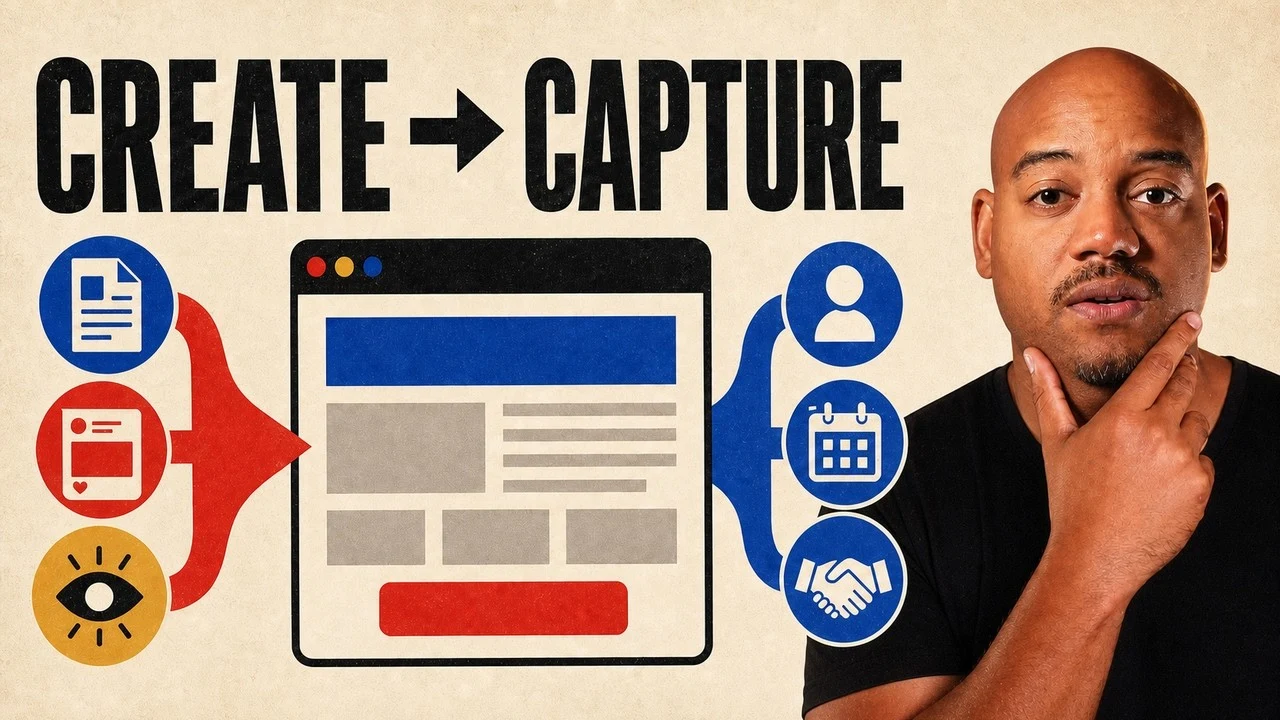
Our visual demand generation framework helps map this educational work to the rest of the funnel.
Consideration: make your approach easier to evaluate
Once someone is more familiar with the problem and your company, provide material that answers why they should consider your approach.
Useful assets include relevant case studies, clear product explanations, and thought leadership that demonstrates how you think about the buyer’s challenge. Choose customer stories that resemble the audience’s circumstances rather than using the same proof everywhere.
The call to action can now be more specific. Direct readers to a page that continues the promise of the ad and explains the subject in enough detail to evaluate it.
Stay visible while the buyer considers options
A prospect can be interested without being ready to buy immediately. Continued, relevant exposure can support that period, but repeating one aggressive sales message is not the only option.
Build a small sequence of useful messages: one explains a use case, another addresses an objection, and another provides proof. The purpose is to add understanding rather than simply accumulate impressions.
Decision: make the next step clear
For an audience showing stronger interest, use a direct offer such as a demo or a sales conversation. The destination should speak to the specific pain point behind that interest.
Make the action and expectations clear. A visitor should know what happens after completing the form and whether the conversation is relevant to their situation.
The six LinkedIn audience lists provide a complementary way to distinguish account situations within that journey.
Your next step: assign a job to each campaign
List your current campaigns and label the buyer stage each serves. Then check whether the creative, destination, and call to action support the same job. Adapt the number of campaigns to the audience size and budget; a framework does not require a separate campaign for every possible segment.
Watch the source video: B2B LinkedIn Ad Tips for Lead Generation.
Frequently asked questions
Should every LinkedIn ad ask for a demo?
No. A cold audience may first need to understand the problem or your approach. Use a demo CTA when it fits the audience’s readiness and the message of the campaign.
Do we need different content for every stage?
The content should serve different questions, but you can adapt existing assets. One case study, for example, may supply a short proof point for an ad and a fuller explanation for a consideration page.
Want help aligning your LinkedIn campaigns with the buyer journey? GET MY FREE PIPELINE AUDIT.